

The end of the year is always a good time to reflect on what you have learned, how you have adapted, and how you have added value during the year. For me, it has been a hectic and challenging year, especially in the first part, and I am ending the year knowing that I could have read more, learned more, and listened more. I thought it might be useful to put together a short list of my favourite business, leadership, and coaching books that I have read this year.
1. Right Kind of Wrong by Amy Edmondson

Amy Edmondson is well known for her work on psychological safety, and this book builds powerfully on that foundation. Right Kind of Wrong explores how leaders and teams can reframe failure, not as something to avoid at all costs, but as something to learn from intelligently.
What makes this book stand out is its clarity. Edmondson distinguishes between careless mistakes, preventable failures, and intelligent risks. In a world where innovation is essential, but failure is still often punished, this book provides leaders with a language, or rather a mindset, for encouraging experimentation without compromising standards.
For coaches, this book is especially useful when working with leaders who struggle with perfectionism or fear of making mistakes. It reinforces the idea that growth requires thoughtful risk-taking. I have recommended this to a few people this year and now I invite more people to read it.
2. Hidden Potential by Adam Grant

Adam Grant’s work usually bridges research and storytelling, and Hidden Potential is no exception. Rather than focusing on talent or intelligence, Grant explores how people develop capacity over time , and how leaders can create environments that unlock that growth.
The book challenges traditional ideas of “high potential” and instead emphasizes persistence, coaching, and opportunity. Grant draws on examples from education, business, and sports to show how ordinary people achieve extraordinary outcomes when supported well.
For leaders, the key takeaway is this: your job is not to identify stars, but to build systems that help people shine. For coaches, it’s a reminder to focus less on innate ability and more on habits, feedback, and belief. There is so much each of us can learn.
3. The Coaching Habit Field Guide by Michael Bungay Stanier
Michael Bungay Stanier’s The Coaching Habit has been a staple in leadership circles for years, and this follow-up is a practical companion rather than a sequel. The Field Guide is designed for leaders who want to transition from understanding coaching principles to applying them in their day-to-day work.
The book is highly actionable, full of exercises, reflections, and real-life scenarios. It acknowledges how hard it can be to stay curious, ask good questions, and resist the urge to jump in with solutions.
This is an excellent book for managers new to coaching, or for experienced leaders seeking a reset. It reinforces the idea that coaching is not a separate activity, but rather a way of being present in everyday conversations. It demystifies what a coach does.
4. Leadership is Language (Updated Edition) by David Marquet
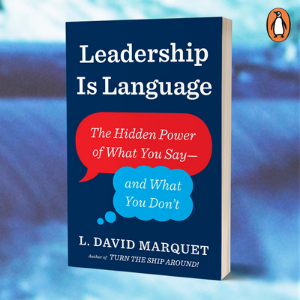
While the original edition of Leadership is Language has been around for a few years, the updated edition feels particularly relevant to me. Marquet argues that the words leaders use shape culture more than policies or strategies ever will. And we can see this every day, both in the good words and the bad ones, that senior leaders use across all fields.
The book focuses on shifting from command-and-control language to language that creates ownership, clarity, and trust. Simple changes, such as replacing “prove it” with “how might we” can have profound effects on team dynamics.
What’s valuable here is how practical the ideas are. Leaders don’t need to change who they are; they need to become more intentional about how they communicate. We, coaches, will find this book helpful when helping clients understand the hidden impact of their everyday language. And as a leader, there are many lessons for us to take on board.
5. Power, for All by Julie Battilana and Tiziana Casciaro
This book takes on one of the most misunderstood topics in leadership: power. Rather than treating power as something inherently negative or corrupting, the authors argue that power is neutral and that utilizing it effectively is a key leadership responsibility.
Drawing on research and real-world examples, Power, for All explores how leaders can share power without losing authority, and how organizations can function more effectively when influence is distributed rather than hoarded.
This book is particularly relevant in conversations about inclusion, ethics, and modern leadership, especially when working in toxic and unproductive cultures. It encourages leaders to examine not just what they do, but how their decisions shape who gets heard and who gets opportunities.
6. The Art of Coaching Teams by Elena Aguilar (Revisited Edition)
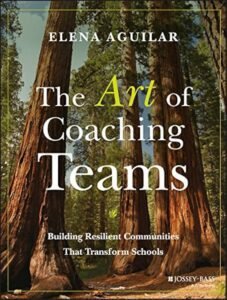
I have been working this year on learning about developing my team coaching skills. Elena Aguilar’s work continues to resonate strongly, especially in environments where burnout and disengagement are common. This updated edition deepens the focus on emotional intelligence, trust, and sustainable performance.
Aguilar emphasizes that teams don’t improve just by fixing processes — they improve when relationships, clarity, and purpose are strengthened. The book provides tools for facilitating challenging conversations, navigating conflict, and fostering collective learning.
For team coaches and leaders alike, this book serves as a reminder that results stem from alignment, not pressure. And that emotional intelligence is critical to positive and impactful leadership.
7. The Coaches’ Handbook Edited by Jonathan Passmore
Written in 2020, this is a definitive reference text for professional coaches who want to ground their practice in both evidence and real-world application. Edited by Jonathan Passmore, the book brings together leading voices in coaching psychology to provide a comprehensive and credible overview of the field. I am so pleased I have finally caught up with it.
Rather than promoting a single methodology, the handbook explores multiple coaching approaches, including behavioural, cognitive, person-centred, positive psychology, and neuroscience-informed practices. This diversity is one of its key strengths, allowing us coaches to adapt our style to different clients, contexts, and cultures.
The book also excels in addressing often-overlooked areas, such as ethics, contracting, supervision, evaluation, and continuous professional development. These chapters make it particularly valuable for coaches working toward accreditation or seeking to strengthen the professionalism of their practice.
8. The Microstress Effect by Rob Cross and Karen Dillon
What I love most about it is how it reframes stress not as a few big, dramatic events, but as the tiny, relentless pressures that accumulate and quietly drain our energy, focus, and resilience. Cross and Dillon blend research with real-life stories to show how microstresses — such as constant pings, brief misunderstandings, or unclear expectations — chip away at our well-being and performance. It’s something anyone with leadership experience can resonate with
This book is deeply practical. Rather than offering buzzword solutions, it gives clear strategies to identify your personal microstress triggers and redesign your work rhythms to protect your attention and joy. I learned a lot from this book and highly recommend it.
9. Radical Leadership: Leading with Love by Michael Houston and Guy Chmieleski
I recently read, and it’s shifted the way I think about leadership. This isn’t a book about tactics or authority; it’s about leading from a place of empathy, courage, and genuine care.
What’s refreshing is how it reclaims love as a practical leadership strength, not a soft ideal. The authors invite us to lead with compassion, listen deeply, and hold people accountable with both firmness and humanity.
What struck me most was how this approach transforms teams. When you lead with love, valuing people as whole humans rather than just “resources”, trust grows, innovation thrives, and engagement deepens. It challenged me to reflect on my own leadership habits: am I creating connection or just checking boxes?
For anyone seeking leadership that’s both effective and humane, Radical Leadership is a beautifully written, deeply inspiring read. It reminded me that the best leaders don’t just manage, they should uplift and empower.
10. The Fertile Void: Gestalt Coaching at Work by John Leary-Joyce
This is a decade-old resource, and I regularly use it. It remains a valuable tool for coaches seeking to help their clients shift mindsets.
Leary-Joyce suggests that not knowing and simply being present with a coachee can be more potent than jumping straight to solutions. Meaningful change often emerges not from forceful intervention, but from deep, shared awareness and from being present.
I noticed myself reflecting on my own coaching practice: how often do I truly stay with what’s present, rather than steering the conversation forward? And how often as a leader do I sit with the now, giving quality time for awareness to emerge?
The book reminds us that real change often happens in the space between words and we need to be willing to stay there. This takes both courage and presence.
I recommend this book to any coach and leader who wants to seriously reflect about what is and isn’t working for them and how presence can be used to unlock clients and complex problems.